
There is a moment, sometimes, when the day quiets enough that you notice the light moving across a wall. The mind registers the angle, the warmth, the slow inch of shadow. An animal would feel the heat. A camera would record the lumens. Only a human, so far as we know, would also feel something like reverence — would name it afternoon, fold it into memory, and decades later, in another country, recognize it again on another wall and grieve quietly for a person no longer alive.
This is what makes our experience strange. We are not only in the world. We interpret it. And the interpretation is itself a kind of seeing.
The Two Sights
Every creature with eyes receives the physical world. Photons arrive, nerves fire, edges resolve into objects, objects into food or threat or mate. This is the first sight, and it is astonishing on its own. The eye is older than language, older than thought as we know it. It is not an achievement but an inheritance — a gift handed to us before we were able to ask for it, or to thank anyone for it.
But somewhere along the way — and no one can say precisely where — a second sight opened. Not a new organ but a new posture. The capacity to stand a little apart from what we see and ask what it means. To watch a river and think not only water but time. To watch a stranger weep and feel, without instruction, that something has been taken from them. To watch a field of wheat bend in unison under wind and call it, without embarrassment, beautiful.
And now here is my secret, a very simple secret: it is only with the heart that one can see rightly; what is essential is invisible to the eye.— Antoine de Saint-Exupéry, The Little Prince (1943)
The second sight does not replace the first. It rests on it, the way a melody rests on a string. Pluck the string and you get a tone. Arrange the tones in time and you get music — and music is not a property of any single vibration. It emerges. It requires a listener who can hold the past note against the present one and hear the relation.
We are listeners of this kind, for everything.
The Whole That Is Not in the Parts
A scientist can describe a sunset with great precision. Wavelengths scattered by particulates. The angle of the sun, the refractive index of the atmosphere, the chemistry of the rods and cones receiving it. Every part of the description is true. None of it is the sunset.
The sunset, as you have actually known it, includes the friend beside you, the cold against your hands, the half-remembered line of a poem, the sense — unbidden and unprovable — that you are part of something larger than yourself and that this largeness is not indifferent. The sunset is a whole, and the whole is not a sum. It is a presence, gathered for a moment in your attention, that the parts cannot account for.
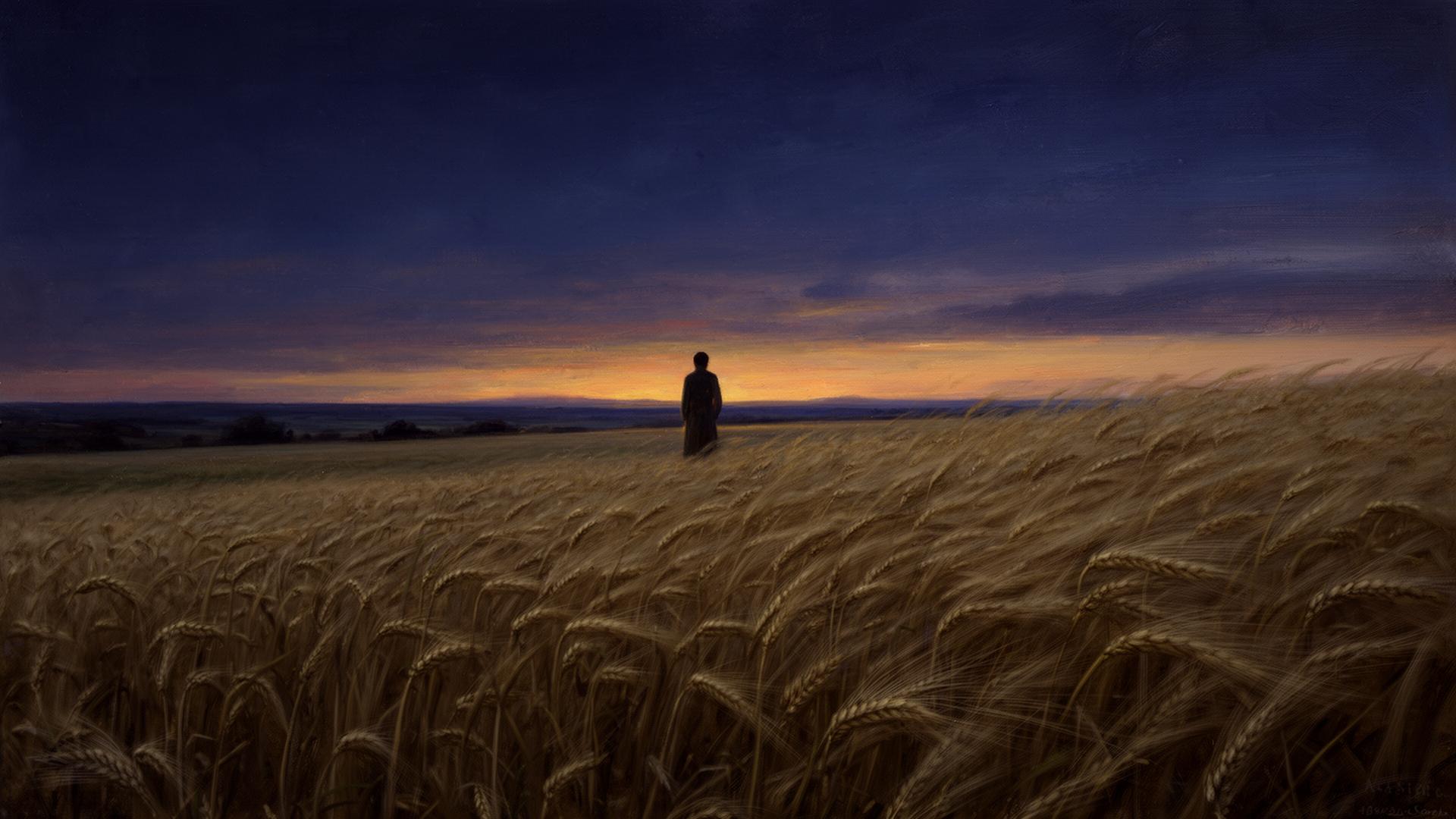
This is the strange gift and burden of being human. We see wholes. We cannot help it. A face is not a set of features; it is a person. A house is not a stack of materials; it is a home. A life is not a sequence of events; it is, if we are lucky, a story — and we are the readers, even of our own.
To see only the parts is a kind of blindness, no less real for being thorough. Reductionism done well is one of the great human achievements. Reductionism mistaken for the whole truth is a small cage built out of true sentences.
Beyond the Physical
It is here that the word spiritual becomes necessary, and it is here that many honest people grow uneasy. The word has been worn smooth by overuse, hung with too many private meanings, conscripted by institutions that sometimes deserved it and often did not. Set the freight aside for a moment. What the word points to is simple and persistent: the conviction, recurring in every culture and every age, that reality is deeper than its surface — that the visible is not the whole inventory of what exists.
Not how the world is, is the mystical, but that it is.— Ludwig Wittgenstein, Tractatus Logico-Philosophicus 6.44 (1922)
You do not have to begin with doctrine. You can begin with experience. Anyone who has loved someone has known a fact that no instrument can register. Anyone who has stood in a forest at dusk has felt addressed by something, however briefly, that could not have been the trees. Anyone who has been forgiven, truly forgiven, has touched a mercy that did not originate inside them.
The poet Gerard Manley Hopkins put it more bluntly than most theologians dare: the world is charged with the grandeur of God. You can disagree with the noun and still feel the verb. Something is charged in things. Something runs through the visible and exceeds it.
These are not arguments. They are testimony. And testimony is what we have always had, in the end, for the most important things. The physical world can be measured. The meanings we live by can only be witnessed.
Interpretation as a Kind of Reverence
To interpret is to take a thing seriously enough to ask what it is for. A scientist interpreting data, a child interpreting a parent's silence, a reader interpreting a line of scripture or a line of Keats — all are performing the same essentially human act. They are refusing to let the world remain mute.
Simone Weil, who thought harder than almost anyone about what it means to actually look, named the cost of this refusal and the gift inside it.
Attention is the rarest and purest form of generosity.— Simone Weil, letter to Joë Bousquet (1942)
This is why a sojourner — a traveler, a temporary guest in the world — sees more than a tourist. The tourist collects sights. The sojourner asks what the sights are saying. The difference is not in the eyes. It is in the willingness to be addressed.
Annie Dillard, walking her creek year after year, came to the same edge from the other side: Beauty and grace are performed whether or not we will or sense them. The least we can do is try to be there. The world will keep going on without our attention. The question is whether we will be present to it while we are here.
We are, all of us, here briefly. The light moves across the wall whether we attend to it or not. But to attend — to receive the physical fully and then to listen for the whole that the physical points beyond itself toward — this is what we were made, or at least what we were strangely equipped, to do.
A Closing Word
The uniqueness of the human is not that we are clever, though we are. It is not that we are the apex of any chain, which is a vanity better set down. It is that we are the place, so far as we know, where the world becomes aware of itself — and where awareness becomes capable of love.
To see the whole, including what is not physical, is not to leave the physical behind. It is to honor it more completely. The bread on the table is still bread. The friend across from you is still a friend. The light is still light. But it is also, all of it, and at the same time, a word being spoken in a language we are still learning to read.
We are sojourners here. Let us read carefully.